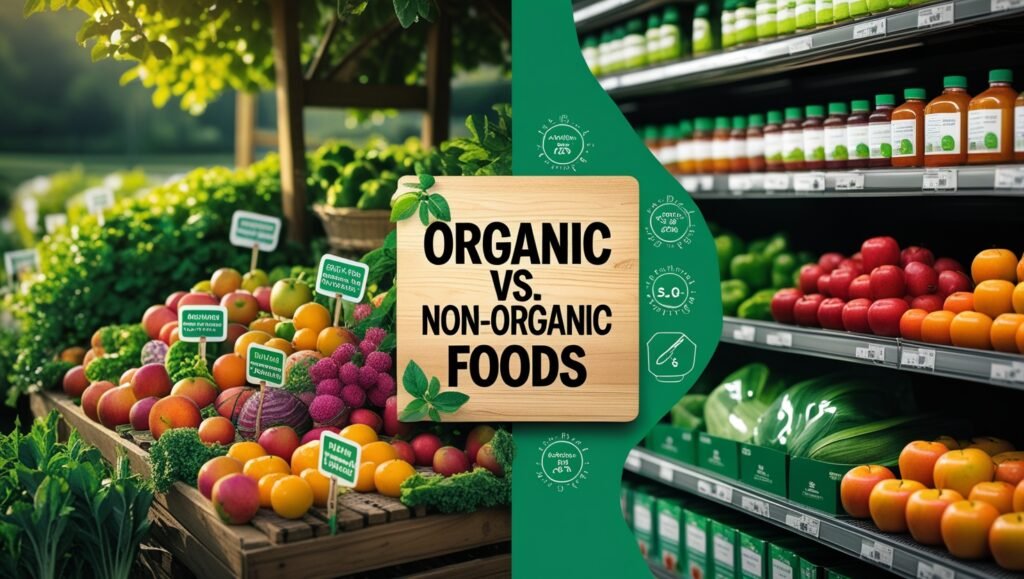
Both organic and non-organic foods are a part of our daily life, but it is important to understand the difference between them. Organic foods are those that are grown without synthetic pesticides, fertilizers, and genetically modified organisms (GMOs). This means that these foods have less use of chemicals and are grown naturally. Non-organic foods or conventional foods are those crops in which synthetic chemicals and pesticides are used so that production is more and there is protection from pests.
People consider organic foods to be more beneficial because they are more natural and chemical-free. But non-organic foods are also easily available in the market and are cheaper than organic foods. Both foods have their qualities and advantages, which depend on people’s preferences, health needs, and budget.
In this blog, we will discuss the key differences between organic and non-organic foods, their nutritional benefits, health impacts, environmental effects, and cost comparison so that you can make the best decision about which foods to include in your diet. It is important to know this so that you can protect both your health and the environment.
Key Differences Between Organic and Non-Organic Foods:
There are some fundamental differences between organic and non-organic foods that are based on their farming practices, pesticide use, and processing methods. Organic foods do not use synthetic pesticides, fertilizers, herbicides, and genetically modified organisms (GMOs). These crops are grown using natural compost and organic farming techniques that maintain the health of the soil and water. Organic farming also focuses on soil fertility and biodiversity.
Non-organic foods or conventional foods use more synthetic chemicals and pesticides to increase production and protect crops from insects and diseases. In this farming, chemical fertilizers improve soil fertility temporarily, but in the long term, they harm soil health. Artificial preservatives and additives may be used in the processing of non-organic foods.
There is also a difference in packaging and labeling. Organic foods have a strict certification that guarantees that the food products are completely organic. Such certifications do not apply to non-organic foods. Organic foods are a little expensive as their production is costly and output is limited.
This difference is not just limited to farming but also affects the taste, texture, and shelf life of these foods. Organic foods are known to taste natural and fresh, while non-organic foods may be more processed and chemically treated. These differences have a direct impact on your health choices and lifestyle.
Key Differences Between Organic and Non-Organic Foods
There are some fundamental differences between organic and non-organic foods that are based on their farming practices, pesticide use, and processing methods. Organic foods do not use synthetic pesticides, fertilizers, herbicides, and genetically modified organisms (GMOs). These crops are grown using natural compost and organic farming techniques that maintain the health of the soil and water. Organic farming also focuses on soil fertility and biodiversity.
Non-organic foods or conventional foods use more synthetic chemicals and pesticides to increase production and protect crops from insects and diseases. In this farming, chemical fertilizers improve soil fertility temporarily, but in the long term, they harm soil health. Artificial preservatives and additives may be used in the processing of non-organic foods.
There is also a difference in packaging and labeling. Organic foods have a strict certification that guarantees that the food products are completely organic. Such certifications do not apply to non-organic foods. Organic foods are a little expensive as their production is costly and output is limited.
This difference is not just limited to farming but also affects the taste, texture, and shelf life of these foods. Organic foods are known to taste natural and fresh, while non-organic foods may be more processed and chemically treated. These differences have a direct impact on your health choices and lifestyle.
Nutritional Value – Does Organic Food Offer More?
The question often arises whether organic foods have more nutrition than non-organic ones. Research produces mixed results in this regard, but some studies have found that organic foods contain slightly more antioxidants, vitamins, and minerals. This is because organic crops get nutrients from natural soil and compost that enhance their nutritional quality.
Organic fruits and vegetables also contain more vitamin C, iron, magnesium, and phytochemicals that support the immune system and reduce the risk of chronic diseases. Organic dairy and meat products also contain high amounts of omega-3 fatty acids, which are good for heart health.
But non-organic foods can also be a part of a healthy diet if you follow a balanced diet. The nutritional difference is not so significant that eating organic alone will improve your health. The nutritional value of organic foods also depends on their freshness, storage, and processing.
So, if you are on a budget, it is important to include fruits and vegetables in your diet, even if you are on a non-organic diet. Diversity and balance are more important for overall health than just the difference between organic and non-organic.
Pesticides and Chemicals – Impact on Health:
The biggest difference between organic and non-organic foods is the amount of pesticides and chemicals used in farming. Organic foods do not use synthetic pesticides and fertilizers, which means they contain very little or no chemical residues. These residues can cause harm to human health, especially to those who are sensitive to pesticide exposure.
Non-organic foods contain higher amounts of pesticides, and if these foods are not washed properly, these residues can accumulate in the human body. This exposure can increase the risk of chronic health issues such as hormonal imbalances, allergies, and cancer. Children and the elderly should especially be protected from pesticide exposure because their immune systems are weakened.
Organic foods use natural pest control methods and crop rotation, which are environment-friendly and reduce health risks. These farming methods also improve soil quality and help prevent water pollution.
If you eat non-organic foods, you can reduce pesticide residues by washing them thoroughly. But including organic foods in your diet is considered safer and more beneficial for health.
Environmental Effects of Organic vs. Non-Organic Farming:
Farming practices have a profound impact on the environment. Organic farming helps improve the quality of land, water, and air because it does not use synthetic chemicals. Organic farmers use natural compost, crop rotation, and biological pest control that maintain soil fertility and promote biodiversity.
Non-organic farming uses excessive chemical fertilizers and pesticides that contaminate land and water. These chemicals can pollute groundwater and harm surrounding ecosystems. There is also a risk of soil erosion and fertility loss in this farming, which makes the land less productive.
Organic farming has a lower carbon footprint because these practices are environmentally friendly and reduce the amount of greenhouse gases. It promotes sustainable agriculture, which keeps the land and resources safe for future generations.
Therefore, organic farming is preferred to protect the environment, but its output is less than conventional farming due to which food supply and cost issues also arising. Understanding the environmental impact helps us in our food choices.
Cost Comparison and Accessibility:
Organic foods are generally more expensive than non-organic foods. This is because of the costly processes of organic farming, limited production, and certification requirements. This is why not everyone can afford organic foods, especially in developing countries where affordability is a big issue.
Non-organic foods are more accessible and easily available in the market. These foods are available at cheaper prices due to more production and distribution networks. Budget-conscious people often choose non-organic foods because they are more affordable for them.
Availability of organic foods is also not everywhere, especially in rural areas it is difficult to access these foods. But nowadays, accessibility is improving due to online stores and organic markets. People plan their diet according to their budget and health priorities.
If you are on a budget, you can consume non-organic fruits and vegetables after washing them properly. You can also focus on some organic foods that contain more pesticide residues like berries and leafy greens. You can choose the best options for your health, keeping in mind both cost and accessibility.
Conclusion:
Both organic and non-organic foods have their advantages and disadvantages depending on your health goals, budget, and lifestyle. Organic foods are more natural and chemical-free, which are better for both your health and the environment. These foods are rich in antioxidants and nutrients, which reduce the risk of chronic diseases.
But organic foods are more valuable and not easily available everywhere. Non-organic foods can also be a part of a healthy diet if you wash them properly and take them with a balanced diet. They fit in your budget and are accessible.
The most important thing is that you include a diversity of fruits and vegetables in your diet. If you can afford organic foods, it is best to include them in your diet, but if not, using non-organic foods wisely is also enough for a healthy life.
Ultimately, a healthy lifestyle, a balanced diet, and mindful eating habits help you lead a healthy and active life. Make the best decisions according to your priorities and resources, and take care of your health.
FAQs:
1. What is the main difference between organic and non-organic foods?
Organic foods are grown without synthetic pesticides, fertilizers, and GMOs, using natural farming practices. In contrast, non-organic foods use synthetic chemicals and pesticides to increase crop yield and prevent pests.
2. Are organic foods more nutritious than non-organic foods?
Some studies show organic foods may contain slightly higher levels of antioxidants, vitamins, and minerals. However, the nutritional difference is not large enough to make organic food a must for a healthy diet balance and variety matter more.
3. Do non-organic foods contain harmful chemicals?
Non-organic foods often contain pesticide residues that, if not washed properly, can affect health over time. These residues may pose risks like allergies, hormonal issues, or even chronic diseases, especially for children and the elderly.
4. How does organic farming benefit the environment?
Organic farming avoids synthetic chemicals, helping to maintain soil fertility, reduce pollution, and protect biodiversity. It also has a lower carbon footprint and supports sustainable agricultural practices for long-term environmental health.
5. Why is organic food more expensive and less available?
Organic food is costlier due to expensive farming methods, limited production, and strict certifications. It may not be widely available, especially in rural areas, but online stores and organic markets are improving access.

